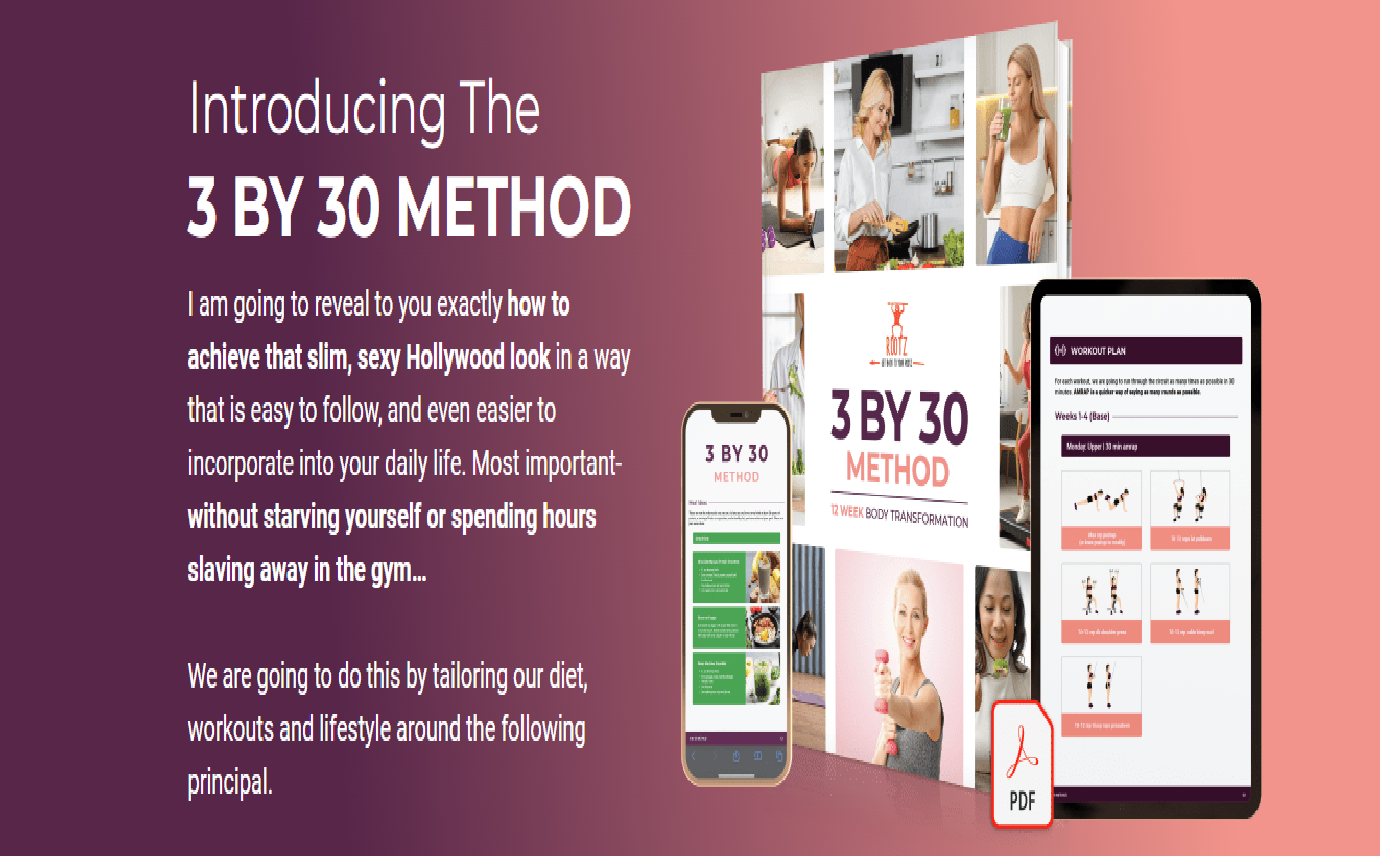
Description
The 3 x 30 Method: A Practical Approach to Sustainable Fitness
The 3 x 30 Method has emerged as a popular fitness approach that focuses on three 30-minute workouts per week, combining both cardio and strength training for optimal results. This accessible fitness programme has gained significant traction recently through social media platforms like TikTok and within broader fitness communities. Designed with busy schedules in mind, this method offers a structured yet flexible routine that can be adapted to various fitness levels. Throughout this document, we’ll explore how the 3 x 30 Method works, its key features and benefits, implementation strategies, potential drawbacks, and real user experiences to help you determine if this approach might suit your fitness journey.
What is the 3 x 30 Method?
The 3 x 30 Method is a straightforward yet effective fitness approach that consists of three 30-minute workout sessions per week. This method strikes a balance between commitment and accessibility, making fitness achievable for those with busy schedules or those new to exercise routines.
At its core, the programme focuses on combining cardiovascular exercise with full-body strength routines to deliver comprehensive fitness benefits. Unlike more intensive programmes that demand daily workouts or longer sessions, the 3 x 30 Method recognises that consistency often trumps intensity for long-term fitness success.
Three weekly sessions
The method requires just three workout sessions per week, typically spaced out to allow for recovery between workouts. This moderate frequency helps prevent burnout while still providing enough stimulus for fitness improvements.
30-minute duration
Each session lasts approximately 30 minutes, making them short enough to fit into even the busiest schedules yet long enough to deliver meaningful health benefits when performed consistently.
Combined fitness approach
Rather than focusing exclusively on either cardio or strength training, the 3 x 30 Method incorporates both elements for balanced fitness development, addressing cardiovascular health, muscular strength, and overall body composition.
This method has gained particular popularity among fitness beginners and those returning to exercise after a break, as it offers a manageable entry point without overwhelming commitment. The structure provides enough guidance while allowing for personalisation based on individual preferences and fitness levels.
How Does the 3 x 30 Method Work?
The 3 x 30 Method follows a straightforward but effective structure that balances different types of exercise across three weekly sessions. Each workout lasts approximately 30 minutes, making the total weekly time commitment just 90 minutes—a feasible amount for even the busiest individuals.
Session Structure
The method typically alternates between dance-based cardio workouts and strength-focused exercises throughout the week. This alternation ensures both cardiovascular health and muscle development are addressed. Each 30-minute session typically includes:
- A brief 3-5 minute warm-up to prepare the body
- The main workout portion lasting 20-25 minutes
- A short 2-3 minute cool-down with stretching
The cardio sessions often incorporate dance moves, walking, or other rhythmic activities that elevate the heart rate. These sessions focus on building endurance, burning calories, and improving cardiovascular health. Meanwhile, the strength sessions typically involve bodyweight exercises or light resistance training that targets major muscle groups for overall strength development.
Dance Cardio Session
Rhythmic movements that elevate heart rate and burn calories while improving coordination.
Rest Day
Recovery time to allow muscles to repair and energy to replenish.
Strength Training
Resistance exercises targeting major muscle groups to build strength and tone.
Rest Day
Another recovery period to prevent overtraining and support adaptation.
Cardio Walk
Brisk walking or similar low-impact activity to boost endurance and recovery.
What makes the 3 x 30 Method particularly effective is its emphasis on structured flexibility. While the framework provides clear guidance, it also allows for adaptation based on individual preferences, fitness levels, and available resources. This balance of structure and flexibility helps maintain consistency, which is perhaps the most crucial factor for long-term fitness success.
3 x 30 Method Features
The 3 x 30 Method distinguishes itself through several key features that make it accessible and adaptable for a wide range of users. These characteristics contribute to its growing popularity as a practical fitness solution for modern lifestyles.
Equipment Flexibility
One of the most appealing aspects of the 3 x 30 Method is its minimal equipment requirements. Workouts can be performed completely equipment-free using bodyweight exercises, or with simple, affordable items like resistance bands or light dumbbells. This makes it ideal for home workouts without requiring significant investment in expensive gear.
Scalable Difficulty
The method adapts easily to different fitness levels, from complete beginners to those with intermediate experience. Beginners can start with lower-intensity versions of exercises, while more experienced individuals can incorporate advanced variations or add resistance to continue challenging themselves as they progress.
Location Versatility
Whether you prefer working out at home, outdoors, or in a gym setting, the 3 x 30 Method can be implemented anywhere. This flexibility eliminates location constraints as a barrier to consistent exercise, allowing users to maintain their routine regardless of circumstances or travel.
Beyond these core features, the 3 x 30 Method embraces variety within its structure. While maintaining the three 30-minute sessions per week, the specific exercises can be regularly changed to prevent monotony and target different muscle groups. This variety not only keeps workouts interesting but also ensures more balanced physical development.
The method also emphasizes progressive overload—the principle of gradually increasing the challenge to continue seeing improvements. This can be achieved by increasing repetitions, adding resistance, decreasing rest periods, or incorporating more challenging exercise variations over time. This built-in progression system helps prevent plateaus that often occur with static workout routines.
Additionally, the 3 x 30 Method encourages mindful movement and proper form rather than rushing through exercises. The relatively short session duration allows users to focus on quality over quantity, potentially reducing injury risk while maximizing the effectiveness of each movement.
What Makes it Different? (vs Similar Routines)
The fitness industry is abundant with workout programmes and methods, but the 3 x 30 Method stands apart from similar approaches in several meaningful ways. Understanding these distinctions can help determine if this method aligns better with your specific fitness needs and lifestyle.
Comparison with the 12-3-30 Method
Unlike the popular 12-3-30 workout (which involves walking on a treadmill at 12% incline, 3 mph, for 30 minutes), the 3 x 30 Method isn’t treadmill-specific or limited to a single exercise modality. While the 12-3-30 focuses exclusively on incline walking for cardiovascular benefits, the 3 x 30 Method incorporates varied movement patterns and different exercise types across multiple sessions.
Greater Exercise Diversity
Many fitness routines tend to focus primarily on either strength training or cardiovascular exercise. The 3 x 30 Method deliberately combines both aspects within its weekly structure, providing a more comprehensive approach to fitness that addresses multiple physical capabilities simultaneously.
Schedule Flexibility
Unlike programmes that require daily commitment or longer workout blocks, the 3 x 30 Method’s moderate frequency and duration make it exceptionally adaptable to busy or unpredictable schedules. This structure acknowledges the reality that consistency often falters when fitness regimens demand too much time or rigid scheduling.
Time Efficiency
With just three 30-minute sessions per week (90 minutes total), the 3 x 30 Method requires significantly less time than many conventional fitness programmes that often recommend 4-6 sessions of 45-60 minutes each.
Balanced Approach
Rather than emphasizing either cardiovascular endurance or muscular strength exclusively, the method provides a balanced approach that addresses multiple fitness components within a single weekly routine.
Sustainability Focus
The 3 x 30 Method prioritizes long-term adherence over short-term intensity, recognizing that sustainable habits ultimately yield better results than unsustainable “all-out” approaches that lead to burnout.
Additionally, the 3 x 30 Method doesn’t require specialist knowledge or complex periodization schemes that characterize many fitness programmes. Its straightforward structure makes it accessible to those without extensive exercise background while still providing enough structure to be effective when followed consistently.
Physical Benefits of the 3 x 30 Method
The 3 x 30 Method delivers a comprehensive range of physical benefits through its balanced approach to fitness. By combining cardiovascular exercise with strength training across three weekly sessions, practitioners can experience improvements across multiple dimensions of physical health and performance.
Cardiovascular Improvements
Regular cardio sessions in the 3 x 30 Method help strengthen the heart and improve the efficiency of the circulatory system. This leads to enhanced aerobic capacity, allowing practitioners to sustain physical activity for longer periods without fatigue. The dance cardio components particularly help improve stamina while making the workout enjoyable.
Muscular Development
The strength-focused sessions within the method target multiple muscle groups, with particular emphasis on the lower body and core. Regular strength training leads to increased muscle tone, improved functional strength for daily activities, and enhanced metabolic health through increased lean muscle mass.
Functional Fitness
By incorporating movements that challenge balance, coordination, and flexibility, the 3 x 30 Method helps develop functional fitness that translates to improved performance in everyday activities. This includes better posture, reduced risk of falls, and greater ease in navigating physical challenges.
Beyond these core benefits, the method also supports healthy body composition changes. The combination of cardiovascular exercise for calorie burning and strength training for muscle preservation creates an optimal environment for fat loss whilst maintaining or building lean tissue. This approach is more sustainable and health-promoting than dieting alone or cardio-only programmes.
Another significant physical benefit is improved recovery capacity. The programme’s structure, with non-consecutive workout days, allows adequate rest between sessions whilst maintaining enough frequency to stimulate positive adaptations. This balanced approach helps prevent overtraining whilst still providing sufficient stimulus for improvement.
For those concerned about bone health, the weight-bearing aspects of the 3 x 30 Method can help maintain or improve bone density, which becomes increasingly important with age, particularly for women. The varied movement patterns also help maintain joint health and mobility through regular, controlled motion across different planes of movement.
Mental and Emotional Benefits
Beyond the physical transformations, the 3 x 30 Method offers substantial mental and emotional benefits that contribute significantly to overall wellbeing. These psychological advantages often become powerful motivators for maintaining the routine long-term.
Mood Enhancement
Each 30-minute session triggers the release of endorphins, the body’s natural mood elevators. These neurochemicals create what’s commonly called a “runner’s high”—a feeling of positivity and energy that can last hours after the workout concludes. Regular participation in the 3 x 30 Method can lead to more consistent mood regulation over time.
Stress Reduction
The programme serves as an effective stress management tool by lowering cortisol levels and providing a constructive outlet for tension. The rhythmic nature of many exercises in the method, particularly the dance cardio components, can create a meditative state that calms the mind and reduces anxiety.
Improved Self-Efficacy
Successfully maintaining the 3 x 30 routine builds confidence in one’s ability to set and achieve goals. As participants notice improvements in strength, endurance, or coordination, this sense of accomplishment often transfers to other areas of life.
Enhanced Adherence
The method’s manageable time commitment and achievable structure make it easier to maintain consistently. This regular participation builds positive associations with exercise, transforming it from a dreaded chore into an anticipated part of one’s routine.
The 3 x 30 Method also promotes cognitive benefits through its varied movement patterns. Different exercise modalities, especially those requiring coordination like dance-based cardio, stimulate neural pathways and potentially support cognitive function. Research suggests regular physical activity may help improve concentration, memory, and creative thinking.
Additionally, the social aspects of the method shouldn’t be overlooked. While workouts can be done individually, many practitioners join virtual or in-person groups following similar routines. This community aspect provides accountability, motivation, and social connection—factors that contribute significantly to emotional wellbeing.
The structured yet flexible nature of the 3 x 30 Method also helps participants develop a healthier relationship with exercise. Rather than viewing fitness as an all-or-nothing endeavour, the moderate approach encourages balanced attitudes toward physical activity as a sustainable part of a well-rounded lifestyle rather than a punishment or obligation.
3 x 30 Method for Weight Loss
The 3 x 30 Method offers a balanced and sustainable approach to weight management that differs from more extreme or intensive weight loss programmes. Its combination of cardiovascular exercise and strength training creates an optimal environment for healthy, gradual fat loss whilst preserving or building lean muscle mass.
Calorie Expenditure
Each 30-minute session burns calories directly through the exercises performed. Depending on individual factors like weight, fitness level, and exercise intensity, a typical session might burn 150-300 calories. While this might seem modest compared to longer, more intense workouts, the cumulative effect of three consistent weekly sessions creates a meaningful caloric deficit over time without overwhelming participants.
Metabolic Impact
Beyond the calories burned during the actual workouts, the 3 x 30 Method influences metabolism in several beneficial ways. The strength training components help build and preserve muscle tissue, which is more metabolically active than fat tissue, potentially increasing basal metabolic rate. Additionally, both strength and cardio sessions can create an “afterburn effect” (excess post-exercise oxygen consumption), where the body continues burning extra calories after the workout ends.
Typical gradual weight loss pattern with the 3 x 30 Method
What makes the 3 x 30 Method particularly effective for sustainable weight management is its moderate approach. Unlike extreme programmes that might deliver faster initial results but often lead to rebound weight gain, the 3 x 30 Method encourages gradual changes (typically 0.5-1kg per week when combined with sensible nutrition) that are more likely to be maintained long-term.
The method is especially suitable for those who have struggled with higher-intensity programmes or have found it difficult to maintain consistency with more demanding routines. By providing a manageable framework that can be integrated into busy lifestyles, the 3 x 30 Method helps establish healthy habits that support weight management as a lifestyle rather than a temporary fix.
It’s worth noting that whilst the 3 x 30 Method creates a supportive environment for weight loss, nutrition remains a crucial component of any weight management strategy. The programme works best when combined with mindful eating habits rather than viewed as a standalone solution.
Who Should Try the 3 x 30 Method?
The 3 x 30 Method’s balanced approach and flexible structure make it suitable for a diverse range of individuals with varying fitness backgrounds, goals, and life circumstances. Understanding who might benefit most from this approach can help determine if it’s the right fit for your personal situation.
Fitness beginners
Those new to structured exercise will find the 3 x 30 Method particularly accessible. The moderate time commitment and scalable intensity make it less intimidating than many fitness programmes, whilst still providing enough structure for meaningful results. Beginners can start with simpler variations of exercises and gradually progress as their fitness improves.
Time-constrained individuals
Busy professionals, parents, students, and others with demanding schedules will appreciate the method’s efficiency. With just three 30-minute sessions per week, the programme can fit into even the most crowded calendars. The flexibility to schedule these sessions on any days of the week further accommodates unpredictable schedules.
Those recovering from injury or illness
With proper medical clearance, the 3 x 30 Method can serve as an appropriate re-entry to exercise for those recovering from injuries or health setbacks. The moderate approach allows for gradual reintroduction to physical activity, and exercises can be modified to accommodate specific limitations or considerations.
The method is also well-suited for those who have struggled with exercise consistency in the past. The manageable structure helps break the cycle of all-or-nothing thinking that often leads to abandoning fitness routines. By focusing on sustainable habits rather than extreme transformations, the 3 x 30 Method supports long-term adherence.
Individuals with weight management goals will find the method’s balanced approach beneficial. The combination of strength and cardio elements supports healthy body composition changes without requiring excessive time commitments or unsustainable intensity levels.
It’s worth noting that whilst the 3 x 30 Method can be adapted for most individuals, those with specific medical concerns should consult healthcare providers before beginning. Additionally, highly advanced athletes or those with very specific performance goals may need more specialized programming, though the method could still serve as a useful active recovery approach within a more comprehensive training plan.
How to Get Started: Step-by-Step Guide
Beginning a new fitness routine can feel overwhelming, but the 3 x 30 Method’s straightforward structure makes implementation relatively simple. Follow this comprehensive step-by-step guide to launch your 3 x 30 journey effectively.
Establish Your Schedule
Select three non-consecutive days of the week for your workouts. This spacing allows for adequate recovery between sessions. Consider your existing commitments and energy patterns when choosing these days. Many practitioners find Monday-Wednesday-Friday or Tuesday-Thursday-Saturday combinations work well, but the specific days should align with your personal schedule for optimal consistency.
Plan Your Session Types
Decide on the specific focus for each of your three weekly sessions. A common approach alternates between cardio-focused and strength-focused workouts. For example:
- Session 1: Dance cardio or other rhythmic cardiovascular exercise
- Session 2: Full-body strength training with bodyweight or light resistance
- Session 3: Low-impact cardio like brisk walking or cycling
Start at Appropriate Intensity
Begin with a level that challenges you slightly but doesn’t leave you completely exhausted. For beginners, this might mean starting with simplified exercise variations or shorter intervals of activity. The goal is to complete the full 30 minutes while maintaining proper form, even if that means including additional rest periods initially.
Gather Basic Equipment (Optional)
While the 3 x 30 Method can be performed with no equipment at all, a few basic items can expand your exercise options:
- Exercise mat for floor work
- Light dumbbells (2-5kg) or resistance bands
- Comfortable, supportive footwear
- Water bottle for hydration during workouts
Track Your Progress
Establish a simple system for monitoring your consistency and improvements. This could be as straightforward as marking completed workouts on a calendar or as detailed as keeping a fitness journal noting exercises performed, energy levels, and observations about progress.
Build Gradually
Focus on consistency for the first few weeks rather than intensity. Once you’ve established the habit of three weekly sessions, begin progressively increasing the challenge by:
- Adding more challenging exercise variations
- Increasing resistance or repetitions
- Reducing rest intervals between exercises
- Incorporating more complex movement patterns
Remember that flexibility is built into the 3 x 30 Method. If you miss a session, simply reschedule it within the same week when possible, rather than abandoning the entire week’s plan. This forgiving approach helps maintain momentum and prevents the perfectionist thinking that often derails fitness efforts.
Recommended Weekly Schedule Examples
The flexibility of the 3 x 30 Method allows for various scheduling arrangements to accommodate different lifestyles, preferences, and fitness goals. Below are several example weekly schedules that demonstrate how the method can be adapted to different situations whilst maintaining its core principles.
Monday
Dance Cardio (30 min)
Energetic movements to upbeat music, focusing on full-body movement and elevated heart rate
Tuesday
Rest Day
Active recovery with light stretching or a casual walk if desired
Wednesday
Strength Training (30 min)
Full-body resistance workout using bodyweight or light dumbbells
Thursday
Rest Day
Active recovery with light stretching or a casual walk if desired
Friday
Cardio Walk (30 min)
Brisk walking, potentially with intervals of faster pace or incline challenges
Weekend
Rest Days
Complete recovery period with optional light activity
Alternative Schedules for Different Needs
For Weekend Warriors
| Tuesday | Strength Training (30 min) |
| Thursday | Dance Cardio (30 min) |
| Saturday | Combined Session (30 min) |
This arrangement concentrates workouts during the weekday evenings and weekend mornings, allowing for complete rest on Mondays, Wednesdays, Fridays, and Sundays.
For Early Risers
| Monday | Morning Cardio (30 min) |
| Wednesday | Morning Strength (30 min) |
| Friday | Morning Cardio (30 min) |
This schedule takes advantage of morning energy and helps establish a consistent routine by performing all workouts at the same time of day before other commitments arise.
The beauty of the 3 x 30 Method lies in its adaptability. If your typical schedule gets disrupted by unexpected events, you can easily adjust by moving sessions to different days within the same week. The key principle to maintain is allowing at least one day of rest between sessions for optimal recovery and results.
Some practitioners also find success with a rotating focus approach, where each week emphasizes slightly different aspects of fitness. For example, one week might focus more on lower body strength, while the next might emphasize core stability or upper body development. This rotation helps ensure balanced physical development while maintaining the fundamental 3 x 30 structure.
Equipment and Space Needed
One of the most appealing aspects of the 3 x 30 Method is its minimal requirements for equipment and space, making it accessible to almost anyone regardless of budget or living situation. Understanding these modest needs can help you prepare appropriately for implementing the method.
Essential Equipment
The 3 x 30 Method can be performed with virtually no equipment at all, relying primarily on bodyweight exercises for strength components and simple movements for cardio elements. However, a few basic items can enhance the experience and expand your exercise options:
Exercise mat
A yoga or fitness mat provides cushioning for floor exercises and defines your workout space. Look for a mat approximately 6mm thick that offers both cushioning and stability.
Light weights (optional)
A pair of light dumbbells (2-5kg) or adjustable dumbbells can add resistance to strength exercises. Resistance bands offer a space-efficient alternative that provides variable resistance.
Proper footwear
Supportive athletic shoes are important for cardio sessions and standing exercises to provide stability and reduce impact stress on joints.
Space Requirements
The 3 x 30 Method requires remarkably little space, making it ideal for apartments, hotel rooms, or other limited areas. A clear space of approximately 2m x 2m is sufficient for most exercises in the programme. This space should allow you to:
- Lie down fully extended (for floor exercises)
- Extend your arms to the sides without hitting obstacles
- Perform movements like lunges or side steps safely
If using a gym for your 3 x 30 sessions, most facilities will have all the equipment and space needed. Many practitioners find that combining home workouts with occasional gym sessions provides helpful variety while maintaining the method’s core structure.
For those preferring a technology-assisted approach, a device to follow workout videos or play music can enhance the experience, though this isn’t strictly necessary. Many free or low-cost fitness apps and online videos specifically cater to 30-minute workout formats that align perfectly with the method’s structure.
The minimal equipment and space requirements of the 3 x 30 Method eliminate common barriers to exercise, making “I don’t have the right gear” or “I don’t have enough room” obsolete excuses. This accessibility contributes significantly to the method’s effectiveness as a sustainable approach to fitness.
Progression and Customisation Tips
To maintain effectiveness and prevent plateaus, the 3 x 30 Method should evolve alongside your improving fitness level. Strategic progression and thoughtful customisation ensure continued results while keeping workouts engaging and challenging.
Beginner Level
Focus on building consistency and proper form with basic movements. Use bodyweight exercises, longer rest periods, and modified versions of more challenging movements.
Intermediate Level
Introduce light resistance, reduce rest periods, and incorporate more complex movement patterns. Begin adding interval training to cardio sessions for increased intensity.
Advanced Level
Utilize heavier resistance, compound movements, and challenging variations. Implement high-intensity interval training (HIIT) principles and more complex coordination challenges.
Systematic Progression Strategies
For optimal results, plan to adjust your routine approximately every 4 weeks. This timeframe allows enough repetition to master movements while preventing adaptation that leads to plateaus. Consider the following progression variables:
Intensity Progression
- Increase resistance (heavier weights or bands)
- Add more challenging exercise variations
- Increase repetitions or time under tension
- Reduce rest periods between exercises
Volume Progression
- Increase the number of sets per exercise
- Add more exercises targeting the same muscle groups
- Extend working intervals in cardio sessions
Complexity Progression
- Incorporate multi-joint compound movements
- Add balance challenges (single-leg exercises)
- Include coordination elements (alternating movements)
- Combine movements into flowing sequences
Customisation for Specific Goals
The 3 x 30 Method can be tailored to support various fitness objectives while maintaining its core structure:
Weight Management Focus
Emphasize higher-repetition strength work and interval-based cardio. Keep rest periods shorter and incorporate more full-body, compound movements that engage multiple muscle groups simultaneously for maximum calorie expenditure.
Strength Building Focus
Increase resistance, reduce repetition ranges (8-12 per set), and extend rest periods slightly. Consider dedicating each weekly strength session to different body regions (lower body, upper body, core) for more targeted development.
Cardiovascular Health Focus
Incorporate more interval training with varying intensities. Consider making two of the three weekly sessions cardio-focused, with just one dedicated to strength maintenance. Include heart rate monitoring if available to ensure appropriate intensity.
Remember that while customisation is valuable, maintaining the fundamental structure of three 30-minute sessions per week provides the consistency that makes the method effective. Changes should refine the approach rather than completely transform it into something unrecognizable.
3 x 30 Method Pros
The 3 x 30 Method has gained popularity largely due to its numerous advantages that address common barriers to consistent exercise. Understanding these benefits can help determine if this approach aligns with your fitness needs and lifestyle preferences.
Time Efficiency
With just three 30-minute sessions per week (totaling 90 minutes), the method fits realistically into busy schedules. This moderate time commitment eliminates the common “I don’t have time” barrier that prevents many people from maintaining a fitness routine. The brief sessions are psychologically approachable, making it easier to start even when motivation is low.
Accessibility
The method requires minimal equipment and space, making it practical for nearly anyone regardless of budget constraints or living situation. Exercises can be modified to accommodate different fitness levels, physical limitations, or preferences. This accessibility extends to location flexibility—sessions can be completed at home, outdoors, or in gym settings.
Balanced Variety
By alternating between cardio and strength sessions, the method prevents the monotony that often leads to programme abandonment. This diversity also ensures more comprehensive fitness development by addressing multiple physical capacities rather than over-emphasizing one aspect. The variety keeps workouts mentally engaging while providing balanced physical benefits.
Sustainable Approach
Unlike extreme fitness regimens that often lead to burnout or injury, the 3 x 30 Method emphasizes moderation and consistency. This approach recognizes that the most effective fitness programme is one you can maintain long-term rather than abandon after a few weeks of unsustainable intensity.
The method’s progressive nature allows for continuous improvement without overwhelming participants. By gradually increasing challenge as fitness improves, the programme provides ongoing results without requiring drastic changes to time commitment or structure.
Holistic Benefits
Beyond physical improvements, the method delivers significant mental and emotional benefits. The manageable structure helps build self-efficacy and confidence, while the regular exercise supports mood regulation, stress reduction, and improved energy levels throughout the day.
Another significant advantage is the method’s flexibility around scheduling. The three sessions can be arranged to accommodate changing weekly commitments, unlike more rigid programmes that prescribe specific days. If a session must be missed, it can often be rescheduled within the same week without disrupting the overall approach.
The 3 x 30 Method also serves as an excellent foundation for building sustainable health habits beyond exercise. Many practitioners report that the structured yet achievable nature of the programme helps them develop consistency in other wellness areas like nutrition, sleep hygiene, and stress management.
3 x 30 Method Cons
While the 3 x 30 Method offers numerous benefits, it’s important to acknowledge its limitations to determine whether it aligns with your specific fitness goals and preferences. Being aware of these potential drawbacks allows for informed decision-making and appropriate expectation setting.
Limited intensity for advanced athletes
The 3 x 30 Method’s moderate approach may not provide sufficient stimulus for individuals with extensive training experience or high fitness levels. Advanced athletes typically require greater volume, intensity, or specificity than the method’s basic structure provides. While modifications can increase difficulty, those pursuing elite performance or specialized athletic goals may find the framework too generalized.
Potential for progress plateaus
Without strategic progression and variation, practitioners may experience diminishing returns after the initial adaptation period. The body naturally adapts to consistent stimuli, potentially leading to plateaus in strength, endurance, or body composition changes. While this can be addressed through thoughtful progression strategies, some individuals may struggle to implement appropriate adjustments without guidance.
Limited supervision and form feedback
When performed independently at home, the method lacks the professional oversight that might be available in group fitness classes or personal training sessions. This absence of external feedback can lead to form errors or inefficient movement patterns, potentially reducing effectiveness or increasing injury risk over time. Self-directed practitioners must take extra care to learn proper technique.
May be insufficient for specific goals
While the 3 x 30 Method provides balanced general fitness benefits, it may not be optimally structured for highly specific objectives like marathon training, powerlifting competition, or sport-specific performance. These specialized goals typically require more targeted programming with different volume, frequency, or exercise selection parameters.
Requires self-motivation
Without the accountability of a scheduled class or training partner, some individuals may struggle with consistency. The self-directed nature of the method requires internal motivation and discipline, particularly for home-based workouts where distractions and competing priorities are abundant.
Some practitioners also report that the method’s emphasis on moderation can sometimes feel less exciting or rewarding than more intensive approaches that provide more dramatic short-term changes. While the sustainable nature of the 3 x 30 Method typically yields better long-term results, those seeking immediate transformation may find the gradual progress less motivating initially.
Additionally, the method’s flexibility, while generally beneficial, can sometimes lead to inconsistent implementation if practitioners don’t establish clear scheduling routines. Without anchoring the three weekly sessions to specific days or times, some individuals may struggle with decision fatigue or find it easier to postpone workouts indefinitely.
It’s worth noting that many of these limitations can be addressed through thoughtful customization or supplementation while maintaining the core benefits of the 3 x 30 approach. Being aware of these potential drawbacks allows practitioners to implement appropriate strategies to mitigate their impact.
Common Side Effects and Risks
While the 3 x 30 Method is designed to be moderate and accessible, any exercise programme comes with potential side effects and risks. Understanding these possibilities allows for appropriate preparation and response, enhancing safety and overall experience.
Normal Physiological Responses
Muscle soreness
Delayed onset muscle soreness (DOMS) is common, particularly when beginning the programme or after increasing intensity. This sensation, characterized by tenderness or stiffness in worked muscles, typically peaks 24-48 hours after exercise and resolves within 3-5 days. This response is normal and generally indicates that muscles are adapting to new demands.
Temporary fatigue
Especially during the initial adaptation period, you may experience increased general fatigue as your body adjusts to the new activity level. This response typically resolves within 2-3 weeks as physiological adaptations occur, after which many practitioners actually report improved energy levels throughout the day.
Increased appetite
The energy expenditure from regular exercise may stimulate appetite, particularly after workout sessions. This response is the body’s natural mechanism to replenish energy stores and support recovery processes. Being aware of this effect helps prevent unintentional overconsumption that might counteract weight management goals.
Potential Risks
While the 3 x 30 Method’s moderate approach minimizes risks compared to more intensive programmes, certain concerns warrant attention:
- Exacerbation of existing injuries: Those with pre-existing musculoskeletal issues should consult healthcare providers before beginning and may need to modify certain movements.
- Form-related injuries: Improper exercise technique can lead to strain or overuse injuries, particularly when progressing to more complex movements without appropriate guidance.
- Cardiovascular stress: Individuals with heart conditions or high blood pressure should receive medical clearance and potentially modify intensity, particularly for cardio components.
Risk Mitigation Strategies
Proper Warm-up
Always begin sessions with 3-5 minutes of light activity to increase blood flow, followed by dynamic stretches specific to the planned exercises. This preparation reduces injury risk and enhances performance during the main workout portion.
Gradual Progression
Resist the temptation to advance too quickly. Follow the principle of progressive overload by making small, incremental changes to intensity, volume, or complexity rather than dramatic increases that might overwhelm recovery capacity.
Body Awareness
Learn to distinguish between productive discomfort (the challenge of growth) and warning pain (potential injury signals). Respond appropriately by modifying movements, reducing intensity, or seeking professional guidance when necessary.
It’s worth noting that for most practitioners, the potential side effects of the 3 x 30 Method are mild and temporary, while the benefits are substantial and long-lasting. The method’s moderate approach significantly reduces risks compared to more extreme or intensive fitness programmes, making it an appropriate option for a wide range of individuals.
Those with specific health concerns should consult healthcare providers before beginning any new exercise regimen, including the 3 x 30 Method. This precaution is particularly important for individuals with cardiovascular conditions, joint problems, or other medical considerations that might influence exercise tolerance or safety.
3 x 30 Method Customer Reviews
Real-world experiences from 3 x 30 Method practitioners provide valuable insights into the programme’s effectiveness, challenges, and benefits beyond theoretical claims. These diverse perspectives highlight patterns of results and experiences across different demographics and fitness backgrounds.
Sarah, 34, Working Mother
“I’ve tried countless fitness programmes over the years but always abandoned them after a few weeks because they demanded too much time. The 3 x 30 Method finally gave me a realistic framework I could maintain alongside my full-time job and parenting responsibilities. After six months, I’ve lost 8kg, but more importantly, I’ve actually stuck with it—the longest I’ve ever maintained a fitness routine. The flexibility to schedule workouts around my unpredictable days has been absolutely crucial.”
James, 52, Office Manager
“As someone who hadn’t exercised regularly in decades, I was skeptical about starting any fitness programme at my age. My doctor recommended the 3 x 30 Method as a moderate approach to address my high blood pressure. Four months in, my blood pressure has normalized, my chronic back pain has diminished significantly, and I’ve regained energy I thought was permanently lost to aging. The gradual progression prevented the injuries I’d experienced with previous attempts at ‘getting back in shape.'”
Emma, 28, Graphic Designer
“I began the 3 x 30 Method hoping for dramatic weight loss results I’d seen from more intensive programmes. After three months, my results weren’t as visually dramatic as I’d hoped, which was initially disappointing. However, I realized I’d actually maintained this programme while I’d always quit the more intense ones within weeks. My energy levels are much more consistent throughout the day, and my sleep quality has improved remarkably. I’m continuing with the method but have adjusted my expectations toward sustainable progress rather than rapid transformation.”
Aggregated Feedback Patterns
Analysis of customer feedback reveals several consistent themes across diverse user experiences:
- Improved adherence: The most frequently cited benefit is the ability to maintain consistency with the programme long-term, particularly among those who had previously struggled with exercise consistency.
- Realistic expectations: Users who approach the method with expectations of gradual, sustainable progress report higher satisfaction than those seeking rapid transformation.
- Holistic benefits: Many practitioners note improvements beyond physical changes, including better mood regulation, increased energy levels, and enhanced sleep quality.
- Mixed weight loss results: While most users report positive body composition changes, the rate and extent vary significantly based on individual factors, particularly nutritional habits alongside the programme.
These real-world experiences suggest that the 3 x 30 Method’s greatest strength may be its sustainability rather than dramatic short-term results. This pattern aligns with contemporary exercise science research indicating that consistency over time typically yields better long-term outcomes than unsustainable high-intensity approaches.
Where to Buy or Access the 3 x 30 Method?
Structured Programme Platforms
Several established fitness platforms offer structured programmes that follow the 3 x 30 Method principles, often with additional guidance and support:
- The Sculpt Society: Offers a dedicated 3 x 30 programme track with guided workout videos specifically designed for this time format.
- Fitness Blender: Provides categorized workout videos that can be filtered by duration (30 minutes) and sorted into a 3-per-week schedule.
- Peloton Digital: Features numerous 30-minute classes across various exercise modalities that can be organized into a 3 x 30 schedule.
Social Media Resources
The 3 x 30 Method has gained significant popularity through social media platforms, where instructors and enthusiasts share workouts and tips:
- TikTok: Search for #3x30method or #3x30workout to find numerous short-form videos demonstrating exercises and sharing experiences.
- Instagram: Many fitness influencers provide free 30-minute workout routines that can be incorporated into a 3 x 30 schedule.
- YouTube: Offers countless free 30-minute workout videos across all fitness modalities that can be organized into a personalized programme.
Mobile Apps
Nike Training Club
Offers numerous free 30-minute workouts that can be filtered by duration, equipment availability, and fitness focus to create a customized 3 x 30 programme.
Fitbod
Utilizes AI to create personalized 30-minute strength workouts that adapt based on your feedback and progress, fitting perfectly within the 3 x 30 framework.
7 Minute Workout
Despite the name, this app allows for the creation of multiple circuit combinations that can be extended to 30-minute sessions and organized into a weekly 3 x 30 schedule.
For those preferring personalized guidance, many certified personal trainers now offer remote coaching services specifically designed around the 3 x 30 framework. These services typically include customized workout plans, nutritional guidance, and regular check-ins to ensure proper progression and form. While more expensive than self-directed options, this approach provides accountability and expert adaptation of the method to individual needs.
Community-based implementations are also emerging through local fitness groups and online forums where participants follow similar 3 x 30 schedules and share experiences, challenges, and modifications. These communities provide valuable social support and accountability without necessarily requiring financial investment.
With the method’s increasing popularity, more structured resources continue to emerge across various platforms. The accessibility of multiple options at different price points ensures that virtually anyone interested in the 3 x 30 approach can find a suitable entry point regardless of budget constraints.
Frequently Asked Questions
As the 3 x 30 Method continues to gain popularity, certain questions consistently arise from prospective and current practitioners. Addressing these common inquiries provides clarity and helps individuals determine if this approach aligns with their specific circumstances and goals.
Does the 3 x 30 Method require prior fitness experience?
No, the method is specifically designed to be accessible to beginners. The flexible structure allows for modification of exercises based on current fitness level, and the moderate time commitment prevents overwhelming those new to regular exercise. Complete beginners may want to start with simpler variations of exercises and potentially shorter durations (20-25 minutes), gradually building up to the full 30-minute sessions as stamina improves.
Can you substitute sessions if pressed for time?
Yes, the method allows for adaptation to accommodate busy schedules. If 30 continuous minutes aren’t available, you can split a session into two 15-minute segments performed at different times of the same day. In cases where a full 30-minute session simply isn’t possible, a compressed 15-20 minute high-intensity workout can occasionally substitute rather than skipping entirely. The key principle is maintaining the three-sessions-per-week frequency, even if the duration sometimes needs adjustment.
How soon are results noticeable?
Initial results vary based on individual factors including starting fitness level, consistency, nutrition, and genetic factors. Typically, subjective improvements in energy levels and mood may be noticed within 1-2 weeks. Measurable fitness improvements (increased endurance, strength gains) often become apparent within 3-4 weeks. Visible physical changes to body composition typically require 6-8 weeks of consistent practice, though this timeline varies significantly between individuals.
Is the 3 x 30 Method sufficient for weight loss?
The method can support weight loss goals when combined with appropriate nutrition. The 90 minutes of weekly exercise creates a caloric deficit that contributes to weight management, but nutritional habits play a crucial role in determining outcomes. Most successful practitioners find that the method creates a positive momentum that makes nutritional improvements feel more manageable, but exercise alone—without dietary awareness—typically produces modest weight loss results.
Can the method be combined with other fitness activities?
Absolutely. The 3 x 30 Method provides a consistent baseline of activity that can be supplemented with additional exercises or sports based on individual interests and goals. Many practitioners use the method as their foundational routine while adding recreational activities like hiking, swimming, or team sports on other days. This combination can enhance results while maintaining the sustainable structure that makes the 3 x 30 Method effective.
Do the three weekly sessions need to be on specific days?
No, the specific days are flexible based on individual schedules. The only recommendation is to avoid scheduling all three sessions on consecutive days, as this limits recovery time. Many practitioners find Monday-Wednesday-Friday or Tuesday-Thursday-Saturday arrangements work well, but any distribution that allows at least one rest day between sessions is appropriate.
What if I miss a scheduled session?
Missing occasional sessions is normal and shouldn’t derail your overall progress. When a session is missed, simply reschedule it within the same week if possible. If that’s not feasible, resume your regular schedule the following week without trying to “make up” for the missed session through longer or more intense workouts, which can increase injury risk. Consistency over time matters more than perfect adherence.
These answers reflect the flexible, pragmatic philosophy that underlies the 3 x 30 Method. The approach acknowledges real-life constraints while providing enough structure to deliver meaningful results when followed consistently over time.
Final Thoughts
The 3 x 30 Method represents a thoughtful response to the common challenges that prevent many people from establishing and maintaining consistent fitness habits. By prioritizing accessibility, flexibility, and sustainability over extreme intensity or time commitment, this approach offers a practical path to improved health and fitness for a remarkably wide range of individuals.
Sustainable Foundation
Perhaps the method’s greatest strength lies in its focus on establishing sustainable habits that can be maintained indefinitely rather than pushing for dramatic short-term results that often lead to abandonment. This philosophy aligns with contemporary understanding of behaviour change and habit formation, recognizing that consistency over time typically yields better outcomes than unsustainable intensity.
Balanced Approach
By addressing both cardiovascular fitness and muscular strength within a single weekly routine, the method provides comprehensive health benefits without requiring separate programmes or excessive time commitment. This balance helps prevent the common pitfall of overemphasizing one aspect of fitness at the expense of others.
Progressive Structure
The inherent flexibility for progression ensures the method can evolve alongside improving fitness, preventing the plateaus that often occur with static programmes. This adaptability makes the 3 x 30 Method suitable for long-term use rather than merely serving as a temporary introduction to exercise.
Inclusive Design
By accommodating different fitness levels, schedule constraints, and exercise preferences, the method opens fitness to demographics often excluded by more demanding or specialized programmes. This inclusivity represents an important step toward making regular physical activity accessible to broader populations.
For those new to structured exercise, the 3 x 30 Method offers an approachable entry point that builds confidence and competence gradually. The moderate approach reduces intimidation and minimizes the risk of the discouragement that often accompanies overly ambitious beginnings. This gentler introduction helps establish positive associations with physical activity that support long-term adherence.
For experienced exercisers facing life transitions or time constraints, the method provides an efficient framework for maintaining fitness when more time-intensive routines become impractical. Rather than abandoning exercise entirely during busy periods, this approach offers a realistic alternative that preserves hard-earned progress.
As with any fitness approach, individual results will vary based on consistency, nutrition, stress management, sleep quality, and genetic factors. The 3 x 30 Method doesn’t promise miraculous transformations or quick fixes—instead, it offers something potentially more valuable: a sustainable path to incremental improvement that can be maintained throughout different life stages and circumstances.
In a fitness landscape often dominated by extremes, the 3 x 30 Method stands out for its moderation, accessibility, and respect for the realities of modern life. By lowering barriers to entry and reducing common reasons for abandonment, this approach has the potential to help more people experience the profound benefits of regular physical activity as a lifelong practice rather than a temporary challenge.





Reviews
There are no reviews yet.